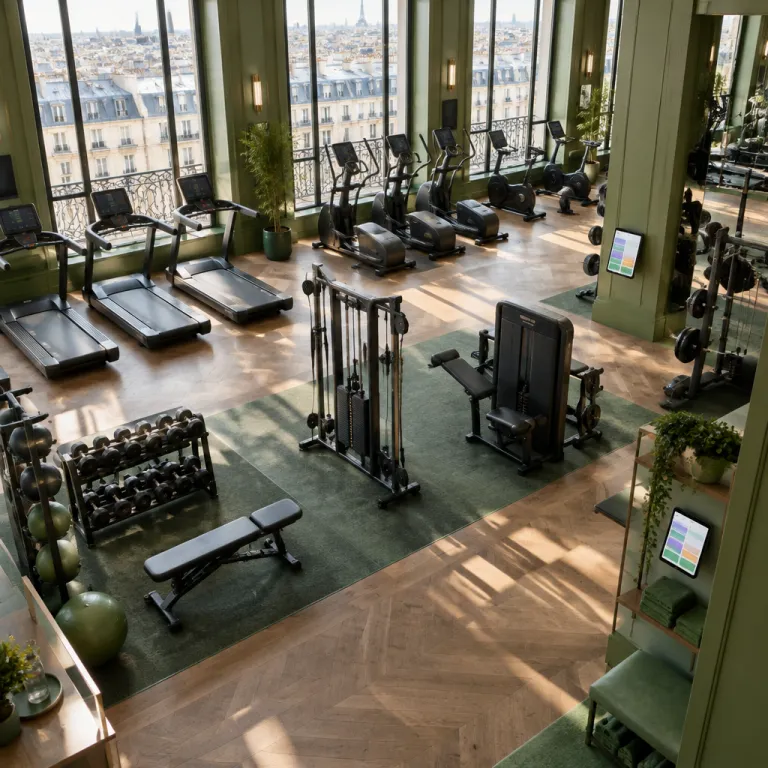
From hotel room to gym floor: how Paris connects your stay to smart training
Choosing a hotel in Paris now often means choosing your preferred style of exercise as well. Many upscale properties quietly integrate digital gym-reservation tools, similar to the sports booking platforms that appeared in France in the late 2010s, linking room reservations with access to curated physical activity zones. This shift reflects how guests place health and quality of life at the centre of their travel decisions.
In practical terms, a connected platform inspired by those early Paris gym booking systems lets you reserve a treadmill, a yoga class, or a strength training slot before you even land at Charles de Gaulle. Hotels use these tools to manage high demand periods, reduce waiting time, and prevent problematic crowding in compact Parisian fitness spaces. For travellers who monitor weight, mood, and mental health, this level of control over exercise routines can feel as essential as choosing the right mattress.
Paris hoteliers have learned that guest behaviour around sports and wellness follows clear patterns, almost like a scale of engagement. Some visitors simply want light physical activity to offset rich bistro meals, while others schedule exercise with near addictive intensity and will not accept withdrawal from their training plan. A flexible booking interface, modelled on modern sports and gym reservation software, allows both profiles to coexist without social friction in the gym corridor.
How hotel tech mirrors clinical thinking about exercise and health
Researchers such as Mark D. Griffiths, whose work on behavioural addictions appears frequently in PubMed-indexed journals, describe how exercise can move from healthy habit to problematic compulsion. Paris hotels do not diagnose exercise addiction, yet their systems quietly acknowledge that excessive exercise and rigid routines can create negative consequences during a holiday. By spacing sessions and limiting high intensity time slots, they reduce risky exercise patterns while still supporting guests’ health promotion goals.
Some properties even ask short screening questions about sports preferences, training phase, and previous injuries when you book a room with gym access. This information feeds into an internal dashboard that functions like a simple monitoring scale, not to label guests, but to balance physical activity offers across the day. The result is a more stable mood modification effect from exercise, with fewer withdrawal symptoms when a favourite machine is temporarily unavailable.
For travellers with a history of eating disorders or exercise dependence, this thoughtful design can protect mental health while still honouring their will to train. Staff are trained to recognise signs of problematic exercise or addictive behaviour, such as visible distress when a session is shortened or cancelled. Instead of encouraging compulsive training patterns, concierges may gently suggest alternative activities like walking tours along the Seine, which maintain movement without triggering withdrawal.
Why you cannot rely on an “Addict Sports” official site when choosing a Paris hotel
Many travellers search online for an “Addict Sports” style gym booking portal for Paris, hoping to find a central website that lists all hotels connected to one brand. As of now, there is no widely recognised, verifiable official website for a Paris gym chain operating under that exact name, and no publicly accessible documentation confirms that an Addict Sports Gym network ran in the city at that time. This uncertainty matters, because it shifts your focus from chasing a single brand to evaluating how each hotel independently manages its sports and wellness technology.
Instead of looking for a non-existent or unverified central booking site, examine how your preferred hotel integrates its own reservation tools with room categories. Some properties partner with local sports medicine clinics or public health initiatives to design safer training schedules for guests who travel with high performance goals. Others simply adapt generic booking software to control access to small fitness rooms, which may not be enough if you rely on structured exercise for mental health stability.
When you read a hotel’s wellness page, look for clear explanations of how they prevent problematic exercise patterns and manage high demand hours. A serious property will mention time-limited slots, capacity limits, and options for both solo training and social classes, which helps reduce behavioural addictions linked to isolation. For a deeper look at how specific Paris hotels claim to use an Addict Sports France–inspired platform, you can review the analysis on how Paris hotels use the Addict Sports France gym booking system official website to refine your stay.
Reading between the lines of hotel wellness marketing
Marketing language often promises a high energy gym, state-of-the-art equipment, and unlimited access, yet rarely addresses the risk-exercise dimension. Guests with a tendency toward exercise addiction or other addictions may interpret “unlimited” as an invitation to train through fatigue, pain, or jet lag. A more responsible hotel explains how its internal usage metrics track demand to prevent negative consequences, without ever labelling guests.
Look for signs that the property collaborates with a recognised health organisation or follows public health guidelines for physical activity. References to PubMed-indexed research, sports medicine associations, or mental health charities suggest that the hotel treats exercise as part of a broader health promotion strategy. This approach respects both the benefits of regular sports practice and the potential for addictive behaviour, especially among high school or university teams visiting Paris for tournaments.
When a hotel states that it can adapt training plans during your stay, it signals awareness of withdrawal symptoms and mood modification effects linked to sudden changes in routine. Such flexibility is crucial for guests who use exercise to manage stress, weight, or social anxiety, and who might otherwise slip into problematic exercise while travelling. In this context, the absence of a central Addict Sports–branded gym booking portal becomes less important than the presence of thoughtful, evidence-informed hotel policies.
Inside the tech: how Paris hotels quietly manage your gym time
Behind the polished lobby, many Paris hotels now run web dashboards that resemble compact versions of the multi-club gym booking platforms launched in France around the same period. These systems segment the fitness area into micro zones such as free weights, cardio machines, and stretching corners, each with its own capacity and schedule. Guests reserve time slots through the hotel app or in-room tablet, which reduces social friction and helps staff avoid problematic crowding.
The system records when you check in for a session, how long you stay, and which type of physical activity you choose most often. Over time, anonymised données reveal patterns of excessive exercise, such as multiple high intensity bookings in a single day or repeated late night sessions. Hotels use these insights not to police behaviour, but to adjust lighting, music, and staff presence in ways that support mental health and discourage addictive behaviour.
Some properties integrate their gym booking tools with broader guest profiles, linking spa reservations, sleep preferences, and even flight arrival times. This holistic view allows them to suggest lighter exercise on the first day to reduce jet lag, then gradually increase intensity as your body adapts. For a detailed perspective on how such advanced sports and gym booking systems elevate the overall guest journey, see the guide on how Paris hotels use advanced sports and gym booking systems to elevate your stay.
Balancing freedom and safeguards in hotel fitness spaces
Guests value autonomy, and a modern gym reservation platform gives them freedom to plan exercise around museum visits and dinners. At the same time, the software can flag patterns that resemble exercise dependence, such as booking every available morning and evening slot. When this happens, staff may gently suggest alternative activities or rest days, framing the conversation around long-term health rather than control.
Hotels that take public health seriously often consult sports medicine specialists to design safe progression schemes for visiting athletes. They may use an internal intensity framework to classify sessions, ensuring that high load workouts are spaced with recovery opportunities. This structure reduces the likelihood of injuries, withdrawal symptoms, and mood swings that can undermine the pleasure of a Paris stay.
For families travelling with high school athletes, such safeguards are particularly valuable, because adolescents can be vulnerable to behavioural addictions and body image pressures. A well-designed booking system can nudge them toward balanced physical activity, mixing structured sports with unstructured walking in neighbourhoods like Le Marais or Saint-Germain. In this way, hotel technology supports both performance goals and the broader mental health of young travellers.
From addiction science to hotel design: what travellers should know
Academic work on exercise addiction, much of it indexed in PubMed and led by experts like Griffiths, has filtered into how serious hotels think about wellness. These studies describe how an initially positive exercise habit can shift into problematic exercise, characterised by loss of control, withdrawal symptoms, and continued training despite injuries. Paris properties that position themselves as wellness leaders quietly integrate these insights into their gym layouts, booking rules, and staff training.
For example, a hotel might limit the number of high intensity classes a guest can book in a single day, even if the sports booking interface would technically allow more. This cap functions like a practical threshold, signalling when behaviour approaches a risky level without pathologising the guest. Staff may also receive guidance on how to respond if someone shows signs of addiction exercise, such as visible anxiety when a session is shortened.
These measures matter because travel can destabilise routines and trigger other addictions, from gambling to substance use, especially when social cues change. By offering structured sports options and gentle boundaries, hotels create a protective environment that supports both physical health and mental health. Guests benefit from mood modification through exercise without sliding into patterns that public health authorities classify as behavioural addictions.
How to read wellness policies through an addiction aware lens
When evaluating a Paris hotel, pay attention to how it frames the relationship between sports, health, and pleasure. Language that emphasises balance, recovery, and listening to your body usually reflects an understanding of risk exercise and negative consequences. In contrast, messaging that glorifies constant high intensity training may appeal to some, but it can also normalise excessive exercise and minimise the importance of rest.
Ask whether the property collaborates with any health organisation or mental health charity, especially if you or a travel companion have a history of eating disorders. Such partnerships often lead to staff training on recognising problematic exercise, withdrawal symptoms, and other signs of distress. Hotels that invest in this expertise tend to manage their gym booking systems more responsibly, even when they draw inspiration from earlier multi-club sports reservation models.
Remember that your stay in Paris should enhance your overall quality of life, not just your fitness metrics or weight targets. A hotel that respects this principle will encourage varied physical activity, from structured sports sessions to leisurely walks along the Seine. This balanced approach aligns with modern health promotion thinking, which values sustainable habits over short-term extremes.
Choosing a Paris hotel when exercise is central to your life
If regular exercise anchors your daily life, you need more than a generic “fitness corner” when booking a Paris hotel. Start by checking whether the property offers timed reservations for its gym, ideally through a system that functions like a refined sports and gym booking platform. Such a tool should allow you to plan sessions around museum visits, business meetings, and evening performances without constant negotiation at the front desk.
Next, examine how the hotel describes its approach to mental health and overall wellbeing. Does it mention collaboration with sports medicine professionals, nutritionists, or a recognised health organisation, or does it simply list machines and weights in square metres? A thoughtful property will explain how it prevents problematic exercise, manages high demand periods, and supports guests who rely on physical activity to regulate mood and sleep.
Finally, consider how the hotel’s location interacts with your training goals and social preferences. A riverside address near the Seine offers natural running routes, while a central Right Bank property may prioritise compact gyms with high tech booking tools. For insights on how your transport choices influence these options, you can consult the overview of how flight choices shape your Paris hotel experience, then match your arrival pattern with your ideal exercise schedule.
Questions to ask before confirming your reservation
Before you finalise a booking, contact the hotel and ask how many guests typically share the gym at peak time. Their answer will reveal whether the system truly manages capacity or simply logs usage without acting on the données. You can also ask whether they have policies for guests who show signs of exercise dependence, such as booking every available slot or reacting strongly to minor schedule changes.
Clarify whether the property offers alternatives when the gym is full, such as access to nearby sports clubs or guided outdoor sessions. Hotels that think in public health terms often partner with local organisations to provide safe, supervised physical activity beyond their walls. This network reduces the risk of withdrawal symptoms and negative consequences when indoor facilities are temporarily unavailable.
If you travel with teenagers or high school teams, ask specifically how the hotel manages youth access to weights and high intensity classes. Responsible properties apply stricter time limits and supervision for younger guests, recognising their vulnerability to addictive behaviour and body image pressures. Such safeguards indicate that the hotel treats sports not only as an amenity, but as a structured health promotion tool.
How Paris hotels turn data into healthier guest experiences
Modern Paris hotels collect detailed données from their gym booking platforms, often inspired by the structure of multi-site sports reservation systems. These tools track not only attendance, but also preferred times, session length, and type of physical activity chosen by different guest segments. Over time, this information helps properties refine schedules, adjust staffing, and design environments that support both performance and relaxation.
Some hotels apply an internal risk model to interpret these données, looking for patterns that suggest problematic exercise or emerging behavioural addictions. For instance, repeated late night high intensity bookings combined with early morning sessions may trigger a discreet check-in from staff. The goal is not to restrict guests, but to ensure that sports remain a positive part of their stay rather than a source of stress or injury.
These insights also inform broader public health–oriented decisions, such as when to offer group classes that foster social connection versus solo training slots. Group sessions can buffer against isolation and reduce the likelihood of addictive behaviour, while still providing mood modification benefits. By aligning their wellness programming with evidence from PubMed-indexed research and sports medicine guidelines, hotels create environments where exercise supports both physical and mental health.
From raw données to personalised, ethical wellness
Ethical use of guest données is central to trust, especially when patterns touch on sensitive topics like addictions or eating disorders. Leading Paris hotels anonymise and aggregate their gym usage data, using it to refine services rather than to profile individuals. They may adjust lighting, music, or class formats when internal metrics suggest that certain environments encourage excessive exercise.
Some properties share high level findings with staff in regular training sessions, translating complex behavioural science into practical hospitality actions. For example, they might learn that shorter, more frequent classes reduce withdrawal symptoms and negative consequences for guests who rely heavily on exercise for mood regulation. This knowledge then shapes how the hotel configures its booking system, class timetable, and communication with guests.
When you choose a Paris hotel that treats its wellness données with this level of care, you gain more than access to treadmills and weights. You enter an environment where your will to stay active is respected, your mental health is considered, and your overall life experience in the city is quietly enhanced. In this sense, the spirit of the early Paris sports gym booking systems lives on not in a single portal, but in the thoughtful, data-informed hospitality strategies of the best Parisian addresses.
Key figures on hotel fitness technology and guest wellbeing
- According to the World Health Organization’s 2020 guidelines on physical activity, adults should complete at least 150–300 minutes of moderate intensity physical activity per week, a benchmark that many Paris hotels now use when designing gym schedules and class timetables.
- Industry surveys from major hotel consultancies such as Deloitte and JLL indicate that properties with structured gym booking systems often report higher guest satisfaction scores for wellness facilities compared with hotels offering unregulated access, although exact percentages vary by market and methodology.
- Research published in sports medicine and psychology journals suggests that a minority of regular exercisers show signs of exercise addiction; estimates typically range from about 3% to 9% depending on the population studied and the screening tool used (for example, the Exercise Addiction Inventory).
- Studies indexed in PubMed report that supervised group exercise can reduce symptoms of mild to moderate depression, with meta-analyses often finding improvements in the range of 20% to 30% on standardised mood scales, which supports the trend toward more guided classes in Paris hotel gyms.
- Data from European hospitality reports show that wellness-oriented travellers are willing to pay a premium for hotels that offer integrated health promotion services, including structured sports and mental health–sensitive programming, reinforcing the business case for advanced gym booking technology.
FAQ about Paris hotels and advanced gym booking systems
Is there an official Addict Sports Gym booking website for Paris hotels?
No widely accepted, verifiable official site operated under that exact name in Paris in 2018 has been documented in accessible public sources. Travellers should instead evaluate each hotel’s own gym reservation tools and wellness policies, rather than relying on a single external platform.
How can I tell if a Paris hotel manages exercise safely for guests?
Look for clear information about time-limited gym slots, capacity controls, and collaboration with recognised health or sports medicine organisations. Hotels that mention mental health, recovery, and balanced physical activity usually apply more thoughtful safeguards against problematic exercise.
Do Paris hotels consider exercise addiction when designing their gyms?
Leading properties increasingly draw on research about behavioural addictions, including exercise dependence and eating disorders, when shaping booking rules and class schedules. They may not use clinical language publicly, but internal guidelines often reflect risk-aware thinking to prevent excessive exercise and negative consequences.
Can I maintain a structured training plan while staying in a Paris hotel?
Yes, many hotels now offer app-based booking systems that let you reserve specific time slots and equipment, similar in spirit to the multi-club sports and gym booking platforms that appeared in Paris in the late 2010s. You can usually plan sessions several days ahead and adjust them around sightseeing or business commitments.
What should I ask a hotel if I travel with a high school sports team?
Ask about youth-specific policies for gym access, supervision, and high intensity classes, as well as any partnerships with local sports clubs or health organisations. Responsible hotels will explain how they protect teenagers from addictive behaviour patterns while still supporting their performance and enjoyment of Paris.