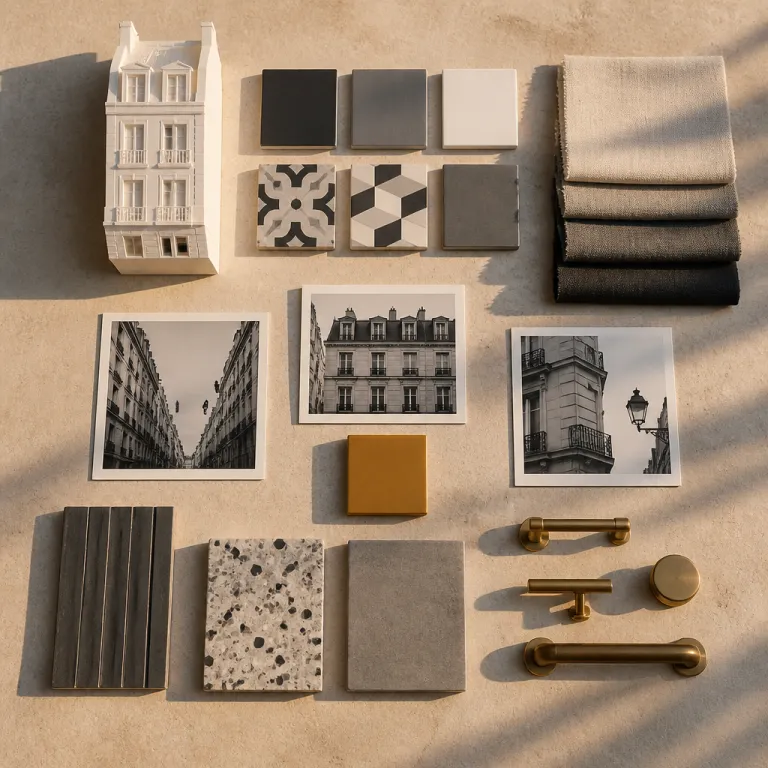
Where to stay in Paris if you love design and character
Choosing where to stay in Paris shapes your entire trip experience. In a compact city of distinct neighborhoods, Paris offers very different moods from one arrondissement to the next, so the area you select will quietly dictate your daily rhythm and the places you naturally explore. When you compare each neighborhood and its hotels carefully you can align your plans with the pros and cons that matter most to you.
For travelers asking where to stay for a design focused escape, Le Marais consistently emerges as the best area to balance style, history, and convenience. This Right Bank neighborhood sits between the Seine and République and gives you walking distance access to the Île de la Cité, the Centre Pompidou, and some of the city’s best galleries while still feeling intimate at street level. It is the kind of place where you can find a Paris hotel with contemporary rooms hidden inside a 17th century façade and step out directly into café life, with the smell of fresh croissants drifting from the corner boulangerie.
Le Marais belongs mainly to the 3rd and 4th arrondissement and feels central without the heavy traffic of the Champs Élysées or the crowds around the Eiffel Tower. Many travelers compare the pros and cons of staying here versus Saint Germain or the Latin Quarter and end up choosing this district because it offers both nightlife and quiet side streets. If you are wondering where to stay in Paris for a first visit and want design forward hotels rather than a standard chain property, this neighborhood is a great starting point, with options ranging from Hôtel du Petit Moulin to the sleek Sinner Paris.
Le Marais : the best area stay for design lovers
Le Marais is widely regarded as the best area for travelers who care about architecture, interiors, and a strong sense of place. Medieval lanes meet grand hôtels particuliers, and many Paris hotel owners have transformed these former private mansions into intimate properties with striking rooms that mix original beams, stone, and contemporary furniture. This creates an experience where your hotel becomes part of the city’s story rather than just a place to sleep, especially in properties like Pavillon de la Reine on Place des Vosges.
When you look at neighborhoods on a map, Le Marais sits like a hinge between the historic core and the creative east. You are a short walk from the Seine in many streets, and within another few minutes you can reach the Île Saint Louis or cross to Notre Dame on the Île de la Cité for a different perspective on the city. That central position means you can find hotels where almost every major sight is within easy walking distance or a brief Métro ride, which is a major advantage for a short trip and lets you spend more time in galleries than in transit.
The neighborhood itself is a great choice if you enjoy strolling without a fixed plan. Around Rue des Francs Bourgeois and Rue Vieille du Temple you will find design shops, galleries, and cafés that make even a simple walk feel curated, and many of the best hotels here echo that aesthetic with thoughtful public spaces and well proportioned rooms. While there are downsides to staying in such a popular area, such as higher prices and busy weekends, the overall balance of atmosphere, convenience, and style makes Le Marais one of the city’s best answers to the question of where to stay in Paris, particularly for travelers who value characterful streets over grand boulevards.
Pros and cons staying in Le Marais compared with other neighborhoods Paris
Travelers often weigh the pros and cons of Le Marais against Montmartre, Saint Germain des Prés, the Latin Quarter, and the area around the Eiffel Tower. Le Marais offers flat streets, an easy grid, and a central location, while Montmartre rises steeply around the Sacré Cœur and feels more village like but less central for a design focused stay. If you prefer to spend more time in galleries and concept stores than climbing steps, Le Marais is usually the better option, though Montmartre’s views and artists’ square can be magical at sunset.
Compared with Saint Germain, which stretches along the Left Bank, Le Marais feels slightly younger and more experimental in its hotel design. Saint Germain des Prés excels for literary cafés and classic Left Bank charm, but its hotels can lean traditional, whereas many Marais properties play with bold color, contemporary art, and inventive use of compact rooms to create a different kind of Paris hotel experience. The Latin Quarter, by contrast, is lively and often more affordable, yet its hotels are frequently simpler and less design forward, which may be a drawback if interiors matter to you and you want your room to feel like part of the trip rather than just a base.
Another comparison many visitors make is between Le Marais and the 7th arrondissement near the Eiffel Tower, or the grand axis of the Champs Élysées. Staying near the tower gives you postcard views and a calm residential feel, but you may spend more time on the Métro to reach creative neighborhoods, while the Champs Élysées area can feel busy and commercial despite hosting some star hotel addresses. For travelers focused on where to stay in Paris for a balance of design, nightlife, and access to multiple districts, Le Marais usually offers more advantages than disadvantages, especially if you like to walk between different quarters in a single day.
How to choose a design forward Paris hotel in Le Marais
Once you have decided where to stay in Paris and settled on Le Marais, the next step is choosing the right hotel for your style and budget. Start by deciding whether you want to be closer to the Seine and Notre Dame on the southern side of the neighborhood, or nearer to the artsy Haut Marais around Rue de Bretagne and the Marché des Enfants Rouges. The southern area offers shorter walks to the islands and the Latin Quarter, while the northern streets feel more local and residential, which can be a plus if you prefer quieter evenings and a less touristy café scene.
When comparing hotels, look beyond the official star rating and focus on the design of the rooms, the layout, and the way public spaces are used. Some of the best hotels in Le Marais transform small footprints into clever suites with sliding partitions, built in storage, and generous showers, while others prioritise larger rooms but simpler décor, so you should decide which matters more for your stay. Pay attention to whether the property describes itself as a design led Paris hotel, and check photos of the lobby, breakfast room, and any courtyard or rooftop to understand how the overall place feels, rather than relying only on square metres and star counts.
Location within the neighborhood also shapes your daily routine and your perception of the city. A hotel near Rue des Archives or Rue des Rosiers will place you in the liveliest streets, with cafés and shops at your door, while a property closer to the edge of the 3rd arrondissement may offer a calmer base and easier access to République and the Canal Saint Martin. In every case, aim for walking distance to at least one Métro line that connects directly to the Eiffel Tower, Montmartre, or the Champs Élysées so that you can explore multiple neighborhoods without long transfers, and check typical journey times rather than just distance on the map.
Access to landmarks from Le Marais : eiffel tower, Montmartre, and beyond
Le Marais may not host the Eiffel Tower or Notre Dame within its official boundaries, but it offers efficient access to both, which is crucial when deciding where to stay in Paris. From many streets in the 3rd and 4th arrondissement you can reach the river in under a ten minute walk and cross to the Île de la Cité for close views of the cathedral and the historic heart of the city. That same central position means you can reach the tower, Montmartre, and the Champs Élysées with straightforward Métro journeys rather than complex changes, often in around twenty to thirty minutes door to door.
For the Eiffel Tower, most travelers take a direct line or a simple connection from nearby stations such as Hôtel de Ville on line 1, Saint Paul on line 1, or Arts et Métiers on lines 3 and 11, turning what could be a long trip across town into a manageable outing. Montmartre, with its hilltop basilica and artists' square, lies to the north, yet from Le Marais you can usually reach it in around thirty minutes via line 4 from Châtelet or line 8 from République, which makes it easy to enjoy its great views and then return to your design focused base. The Champs Élysées and the Arc de Triomphe are similarly accessible by line 1 from Hôtel de Ville or line 9 from Saint Ambroise, so you do not need to stay in that area to experience its grand avenues.
Access to the Left Bank is equally simple from this neighborhood. Cross the Seine on foot to reach the Latin Quarter and Saint Germain des Prés, where you can explore bookshops, cafés, and galleries before returning to your hotel in Le Marais for a quieter evening. This combination of centrality and character is why many seasoned visitors consider Le Marais one of the best answers to the question of where to stay when you want both design and easy movement between different parts of Paris, without feeling locked into a single postcard view.
Practical tips for a seamless stay Paris in Le Marais
To make the most of your stay in Le Marais, plan around both the design of your hotel and the rhythm of the neighborhood. Book early, especially if you are targeting the best hotels with distinctive interiors, because Paris welcomed around 38 million tourists in 2019 according to the Paris Convention and Visitors Bureau (figures consulted 2024), and the most characterful properties in this area fill quickly. Remember that the average hotel price in the city was about 150 euros per night in 2023 based on Statista data (accessed 2024), so design forward addresses in a central area like Le Marais may sit above that benchmark and require a slightly higher nightly budget.
When comparing options, list the pros and cons of staying in each place you consider, including room size, natural light, and whether the property offers quiet inner courtyard rooms or only street facing ones. Check how many minutes’ walk you are from key Métro stations and whether you can reach the Eiffel Tower, Montmartre, Notre Dame, and the Champs Élysées with one or two simple rides, because this will shape how you experience the city each day. Also think about the immediate streets around the hotel, since a great neighborhood with cafés, bakeries, and small design shops will enhance your sense of connection to Paris beyond the walls of your room and make even quick coffee runs feel like part of the trip.
Finally, use tools such as online maps, virtual tours, and hotel booking platforms to visualise exactly where your chosen Paris hotel sits within Le Marais. The local tourism board, travel agencies, and experienced hotel concierges can all help you find places to stay that match your priorities, whether that is proximity to Rue des Francs Bourgeois, a quiet side street, or a specific arrondissement border. By aligning your expectations with the realities of the neighborhood and the design of the rooms, you will answer the question of where to stay in Paris with confidence and enjoy a stay that feels both stylish and deeply rooted in the city.
Key figures to guide where to stay in Paris decisions
- Paris welcomes around 38 million tourists each year according to the Paris Convention and Visitors Bureau (2019 data, consulted 2024), which means the best hotels in central neighborhoods such as Le Marais, Saint Germain des Prés, and the Latin Quarter often sell out months in advance.
- The average hotel price in the city is about 150 euros per night based on Statista data for 2023 (accessed 2024), so travelers seeking design forward rooms in a prime area like Le Marais should budget above this for a high quality Paris hotel.
- Le Marais spans mainly the 3rd and 4th arrondissement, placing guests within roughly a ten to twenty minute walk of the Seine, the Île de la Cité, and multiple Métro lines that connect directly to the Eiffel Tower, Montmartre, and the Champs Élysées.
- Central neighborhoods such as Le Marais, Saint Germain des Prés, and the Latin Quarter typically allow visitors to reach at least three major landmarks within a thirty minute walk, which is a key factor when deciding where to stay in Paris and comparing different districts.
FAQ : where to stay in Paris and Le Marais specifics
Which Paris neighborhood is best for first time visitors ?
Le Marais is ideal for first time visitors due to its central location, walkable streets, and vibrant atmosphere, while still feeling manageable in scale.
Is Montmartre suitable for families ?
Yes, Montmartre offers a charming environment with family friendly attractions, though its steep hills and many steps may be challenging with strollers.
Are accommodations in the Latin Quarter affordable ?
The Latin Quarter provides a range of accommodations, including budget friendly options, student oriented hotels, and simple guesthouses close to major sights.
Why is Le Marais recommended for design forward stays ?
Le Marais concentrates many design led hotels in historic buildings, giving travelers stylish rooms and a strong sense of place. Its streets mix galleries, concept stores, and cafés, so your immediate neighborhood feels curated and inspiring throughout your stay. The central arrondissement location also offers easy access to Notre Dame, the Latin Quarter, Saint Germain des Prés, the Eiffel Tower, and Montmartre.
How far is Le Marais from major Paris landmarks by foot ?
From many hotels in Le Marais you can reach the Seine and the Île de la Cité in around a ten minute walk. Notre Dame and the Latin Quarter are usually within fifteen to twenty minutes on foot, while the Eiffel Tower, Montmartre, and the Champs Élysées are better reached by Métro from nearby stations. This balance of walkability and transport links is a major advantage when deciding where to stay in Paris.
Sources
Paris Convention and Visitors Bureau (data consulted 2024) ; Statista (hotel price statistics accessed 2024) ; Office de Tourisme de Paris.