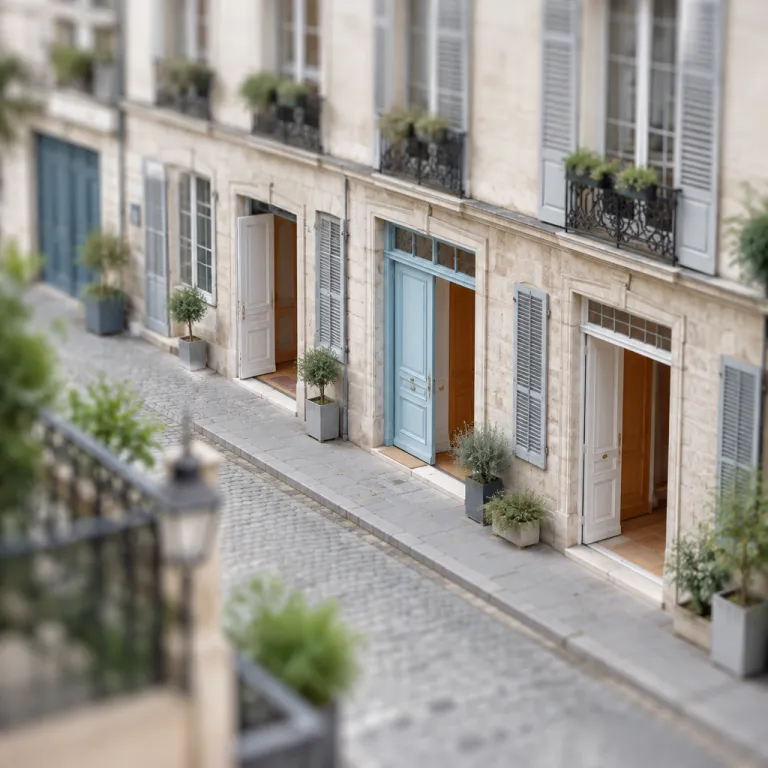
How European Heritage Days reshape a family weekend in Paris
For one September weekend, Paris changes its rhythm completely. During the European Heritage Days, or Journées européennes du patrimoine, ministries, embassies and hôtels particuliers that are usually places closed to visitors suddenly open their doors and invite you inside. The result is a city that feels both familiar and newly revealed, especially if you are choosing a hotel with children in tow.
This edition of the heritage days focuses on photographic heritage and on heritage at risk, a theme officially announced by Visit Paris Region for the forty third programme in septembre. That means your Paris tour can follow a clear thread, moving from early daguerreotypes in a beaux arts hall to contemporary art photography installations in former industrial spaces, all within a few métro stops. Think of it as a curated arts Paris weekend, where the city itself becomes a gallery and every queue rewards you with a story your family will remember.
The key to enjoying these heritage days is restraint. Many of the most coveted historic monuments and secret places are free, but they either require advance booking or involve long lines at the city hall gates and at the Hôtel de Ville on rue de Rivoli. Plan for two or three paris journées targets each day, not ten, and you will find that the special event feels like a privilege rather than a marathon.
Why your hotel choice matters this particular weekend
Because so many european heritage sites are concentrated in the centre, staying central pays off more than ever. A hotel near the Seine in the 1st, 4th or 7th arrondissement lets you walk between the Hôtel de Ville, the Institut de France and the courtyards of the École des Beaux-Arts without wrestling strollers on crowded métro stairs. Families who book near rue Saint-Antoine in the Marais or near rue de Varenne on the Left Bank can reach several hôtels particuliers and arts institutions in minutes, then retreat easily for a nap or an early dinner.
Journees du Patrimoine Paris 2026 is not about ticking every monument in the city, it is about choosing a neighbourhood base that fits your pace. Parents who want quieter streets often prefer the 7th, where embassies and ministries open doors for the heritage days and the pavements feel calmer for small legs. Those who like a livelier arts scene might find that a hotel near the Canal Saint-Martin or in the 11th gives faster access to contemporary art spaces, while still keeping central Paris within a short ride.
Remember that some of the most interesting places are usually closed public institutions, from courts to ministerial halls. When these places closed during the rest of the year finally open their doors, you will be grateful to be within walking distance rather than stuck in traffic on the périphérique. In a city where every extra kilometre can feel long with children, proximity is not a luxury ; it is the difference between a joyful heritage tour and a day of complaints.
Choosing the right arrondissement for heritage days with children
Families coming for Journees du Patrimoine Paris 2026 should think in clusters, not in isolated monuments. The Marais and the 7th arrondissement are your best allies, because they concentrate hôtels particuliers, ministries and museums along compact stretches of rue that are easy to navigate with a pushchair. From a single hotel base near rue des Francs-Bourgeois, you can reach the Musée Carnavalet, several private mansions and the city hall of the 4th on foot, turning the streets themselves into part of the tour.
In the 7th, the area around rue de Varenne and rue de Grenelle offers a different flavour of heritage days. Here, the façades of embassies and ministries that usually feel like closed public fortresses suddenly open doors for guided visits, often with French civil servants explaining the history in accessible language. Children tend to love the contrast between the quiet residential feel of these places and the grand beaux arts staircases and halls hidden inside.
If your family relies on bikes or Vélib, staying near the river makes logistics easier. Look for a hotel close to protected cycle lanes on the quais, and use a practical guide on how to choose a Paris hotel when you rely on bikes and Vélib to refine your shortlist. This lets you glide between heritage days sites along the Seine, from the Île de la Cité near Notre-Dame to the Musée d’Orsay area, without wrestling with complex junctions or des jeux of traffic lights that break your rhythm.
Half day versus full day : realistic pacing
With younger children, treat each half day as a self contained story. Morning might be dedicated to one major european heritage institution, such as the Hôtel de Ville with its grand hall and beaux arts salons, followed by a picnic in the nearest square and a quiet walk back along a shaded rue. Afternoon can then be left free for a smaller, less crowded site, perhaps one of the lesser known arts Paris venues or a local city hall that participates in the journees européennes with family workshops.
Older children and teens can handle a denser programme, but even then, three stops are usually enough. Start with a headline site linked to photographic heritage, maybe a museum showing early images of Paris, then move to a ministry or court that only opens doors during these heritage days. End with something lighter, such as a contemporary art space or a temporary exhibition in a school of des beaux arts, where the atmosphere is informal and the conversation can wander.
Whatever your children’s ages, build in time for simple city pleasures. A detour for ice cream on Île Saint-Louis, a pause to watch street performers near Hôtel de Ville, or a quiet moment on a bench facing Notre-Dame can be as memorable as the grandest historic monuments. In a weekend shaped by queues and special event schedules, these unscripted pauses are where Paris feels most like itself.
Following the photographic heritage thread across the city
This year’s theme of photographic heritage gives you a ready made narrative for Journees du Patrimoine Paris 2026. Official information from Visit Paris Region confirms that the focus is on the bicentenary of the invention of photography by Nicéphore Niépce, alongside a strand on heritage at risk. For a family, that means you can turn the whole weekend into a visual treasure hunt, moving from early plates to contemporary art photography while keeping everyone engaged.
Start in central Paris, where many institutions are weaving photography into their heritage days programming. A museum may show archival images of the city hall through wars and restorations, while a school of beaux arts might exhibit student work responding to historic monuments under threat. Children often respond more strongly to images than to dates, so these visual narratives help them grasp why certain european heritage sites feel fragile and why some buildings are classed as heritage at risk.
From there, you can extend your tour to neighbourhoods where contemporary art has reshaped former industrial spaces. Areas in the 13th or around the Canal de l’Ourcq often host arts Paris events that link photography, street art and urban heritage, turning old warehouses into temporary halls of images. If you are curious about refined day trips from Paris by train, an elegant rail escape from your hotel base can also connect the capital’s photographic heritage with nearby towns that played a role in the early days of the medium.
Secret places, fragile buildings and what to prioritise
Every edition of the heritage days brings a tension between the famous and the secret places. You could spend the whole weekend queuing for the most iconic closed public institutions, or you could choose smaller sites where the doors open with less drama but more conversation. In practice, a mix works best : one major paris journées highlight, one medium sized institution, and one genuinely hidden courtyard or archive.
Look out for buildings flagged as heritage at risk, especially those where photographic archives show how much has already been lost. These might be lesser known churches, industrial halls or schools of des beaux arts whose future is uncertain, yet whose interiors are rich with beaux details and stories. Visiting them during the journees européennes is a way to connect your children with the idea that european heritage is not guaranteed, that what they see inside today may not be there for the next generation.
Some of the most moving visits happen in places that feel almost ordinary from the rue. A modest façade can hide a staircase lined with portraits, a council chamber where decisions about des jeux Olympiques infrastructure were debated, or a small archive of photographs documenting the transformation of a neighbourhood. These are the moments when the special event feels intimate rather than grand, when the city opens doors not just to its monuments but to its memory.
Practical strategies : queues, food, and where to sleep
On heritage days weekend, Paris operates on two speeds : those who planned, and those who did not. Families who book timed slots where required, arrive early for the most popular sites and keep a flexible backup list of nearby places find the experience far smoother. Those who improvise everything often end up spending more time in line outside closed public gates than inside the halls they came to see.
When you look for a hotel, prioritise walking access to at least one cluster of heritage days sites. A property within ten to fifteen minutes on foot from the Hôtel de Ville, the Île de la Cité or the main Marais streets means you can adapt quickly if a queue looks impossible, simply pivoting to another open door nearby. This is especially useful with younger children, who tolerate a change of plan better than a long wait in a crowded rue with nothing to see.
Food matters more than you think on a dense cultural weekend. Choose a base near everyday French places to eat, not just destination restaurants, so you can find a quick bistro on a side street or a bakery on the corner between visits. If you are curious how Michelin starred restaurants in Paris might shape your hotel choice, a detailed guide can help you balance gastronomic ambitions with the practical needs of heritage days, when your schedule is already defined by fixed opening hours.
Linking heritage days with the wider city
Journees du Patrimoine Paris 2026 sits at the intersection of culture, daily life and the broader story of France. You will see how the Hôtel de Ville functions as both city hall and symbolic heart, how Notre-Dame’s restoration is framed within european heritage debates, and how contemporary art installations comment on the future of historic monuments. For children, this is a rare chance to see that the arts are not separate from politics or from the streets they walk every day.
Use the weekend to teach them to read the city. Point out how a plain façade on a quiet rue can hide a grand hall, how the words « école des beaux-arts » or « hôtel de ville » on a stone lintel signal a story worth asking about. Show them that free Paris is not just about not paying an entry fee, it is about feeling entitled to step inside institutions that usually feel distant.
By Sunday evening, your family will have its own mental map of paris journées highlights and quieter corners. You will know which doors opened, which places closed remained mysterious, and which special event moments felt most alive. In the end, what stays with you is not the list of sites visited, but the memory of standing together in a sunlit stairwell, somewhere inside the city, watching the light fall on old photographs and realising that heritage is simply time made visible.
FAQ about European Heritage Days in Paris
When do European Heritage Days take place in Paris ?
European Heritage Days in Paris usually happen over one weekend in septembre, with events on both Saturday and Sunday. For the current edition, Visit Paris Region confirms that the official dates are set for a specific mid September weekend. Always check the latest programme shortly before your trip, as individual sites sometimes adjust their opening hours.
Are visits really free during heritage days ?
Most participating sites in Paris offer free entry during the heritage days, including many ministries, city halls and historic monuments. Some locations may charge for special exhibitions or guided tours, but the core access is generally free Paris wide. You still need to budget time, because the real cost can be the queues rather than the ticket price.
Do I need to book in advance for popular sites ?
Many of the most sought after institutions, such as major ministries or the Hôtel de Ville, require advance booking for Journees du Patrimoine Paris 2026. Others operate on a first come, first served basis, which can mean long lines if you arrive late in the day. Always consult the official programme for each site and reserve early where possible, especially when travelling with children.
Which neighbourhood is best for a family hotel during heritage days ?
For families, the Marais and the 7th arrondissement work particularly well during European Heritage Days. Both areas offer a high concentration of participating sites within walking distance, from hôtels particuliers to embassies and museums. Staying there reduces travel time between visits and makes it easier to return to your room for breaks.
Is it worth visiting lesser known sites instead of the big names ?
Balancing headline monuments with lesser known sites often creates a richer weekend. Smaller institutions and secret places usually have shorter queues and more personal encounters with staff or volunteers. Combining one or two major landmarks with quieter visits lets you experience both the grandeur and the everyday texture of Parisian heritage.